
Most conversations about AI in business focus on efficiency: doing the same work with fewer people or less time. That's real, but it undersells what's actually valuable. The bigger win is speed, specifically, how fast a business can go from "something changed" to "we understood it and responded." That gap, more than headcount, is what separates businesses that adapt well from ones that get blindsided.
The Cost of Slow Answers
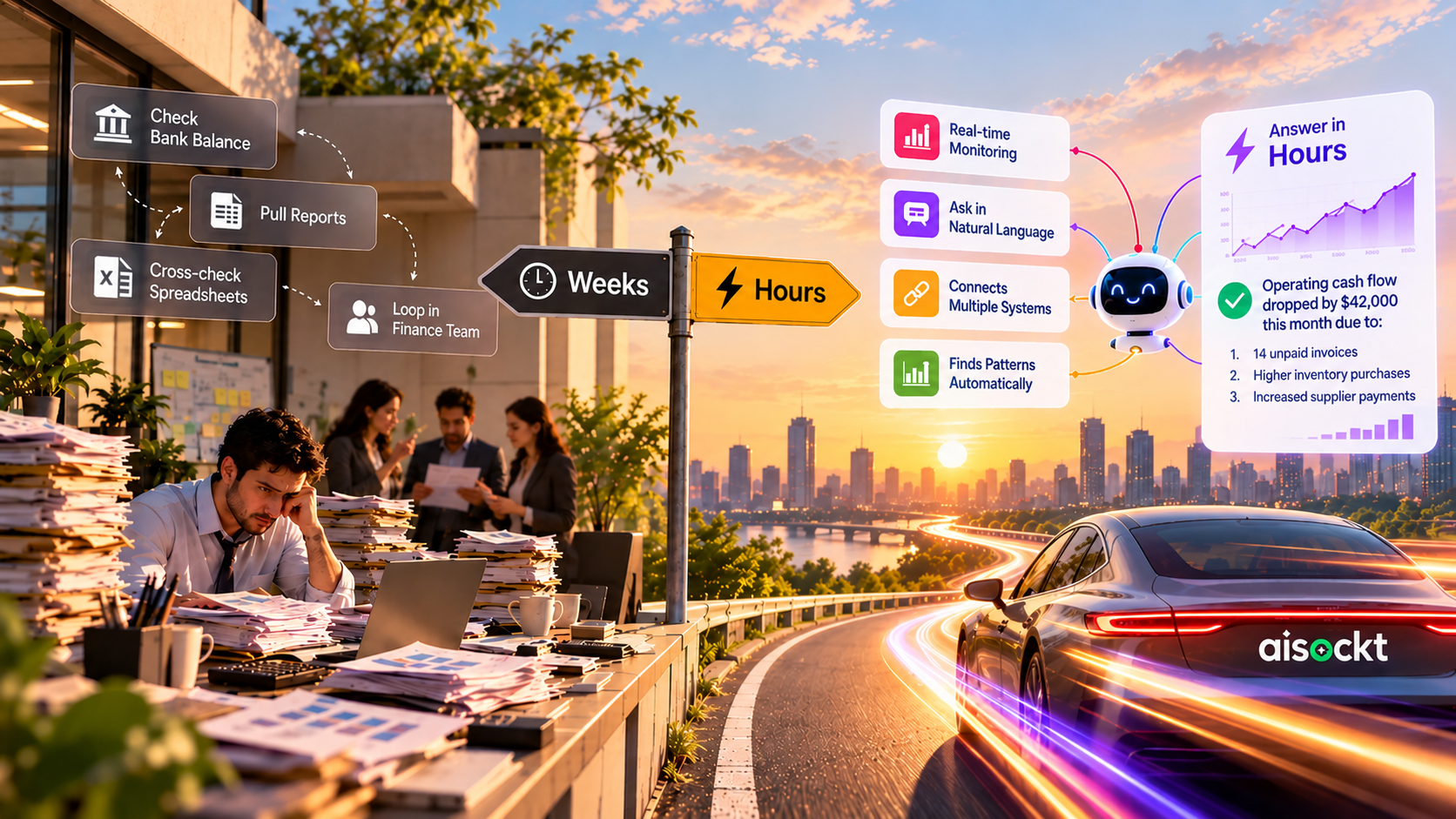
Consider a common scenario: a company's cash position tightens unexpectedly. In a traditional setup, someone notices the bank balance looks off, pulls reports from the accounting system, cross-checks a few spreadsheets, maybe loops in the finance team, and a few days later has an explanation. By the time the "why" is understood, the window to act on it has often already narrowed.
AI collapses that timeline. When a system can continuously monitor financial data across connected platforms and flag anomalies as they emerge, not at month-end close, the business finds out in hours, not weeks. That difference in speed is often worth more than the labor hours saved.
Three Ways AI Compresses Decision Time
Continuous monitoring instead of periodic review. Instead of waiting for a monthly report to catch a problem, AI systems can watch data streams in real time and surface issues, an unpaid invoice aging past a threshold, a connector losing sync, an expense category spiking, the moment they happen.
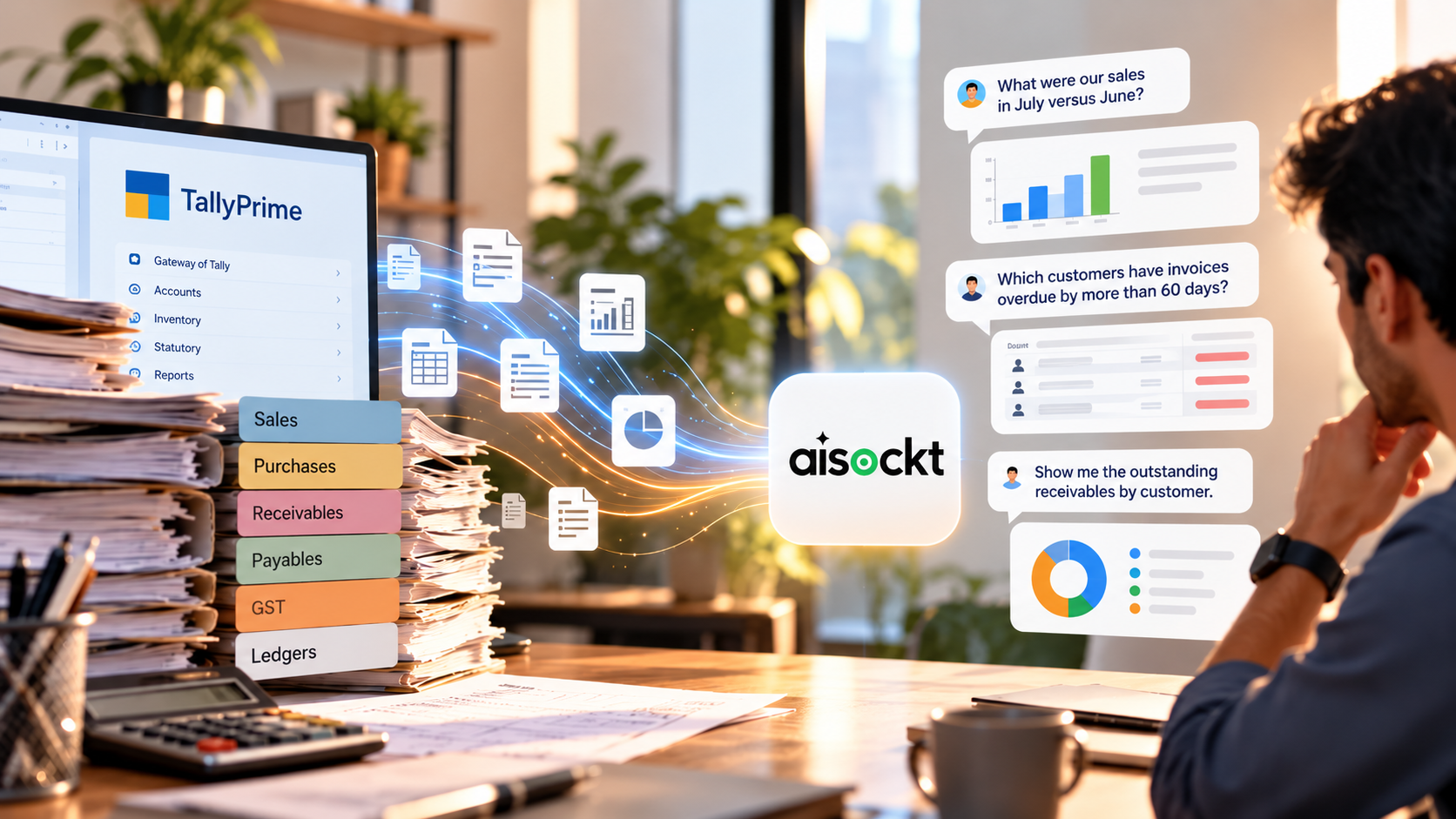
Natural-language access to complex data. Asking "why did operating cash flow drop this month" and getting a direct, data-backed answer is faster than asking a finance analyst to build a bridge analysis. This doesn't replace analysts, it removes the bottleneck for routine questions so people can focus on judgment calls.
Cross-system correlation. A lot of business problems only become visible when you connect data across systems, sales pipeline data with cash flow, inventory levels with payables. AI that can query multiple systems at once catches patterns a single-system dashboard never would.
What This Looks Like in Practice
A business running AI-assisted monitoring across its financial and operational tools might see:
Anomalies flagged within hours instead of discovered at quarter-end
Fewer meetings spent gathering information, more spent deciding what to do with it
Faster onboarding for new team members, since they can ask questions of the data directly instead of learning where everything lives
Earlier warning on cash or working capital issues, while there's still time to act
Speed Without Losing Control
Faster isn't automatically better if it comes at the cost of accuracy or oversight. The businesses that get this right build AI systems that surface information and recommendations quickly, but still route consequential decisions through a human. Speed applies to detection and analysis; judgment still applies to action.
The Takeaway
The businesses pulling ahead with AI aren't necessarily the ones using the most sophisticated models, they're the ones that shortened the distance between a change happening and someone acting on it. Tools like AiSockt are built with this in mind: connecting directly to the systems a business already runs on and turning scattered data into fast, usable answers. In a competitive environment, that speed advantage compounds quietly, month after month, long before it shows up as a line item on a report.