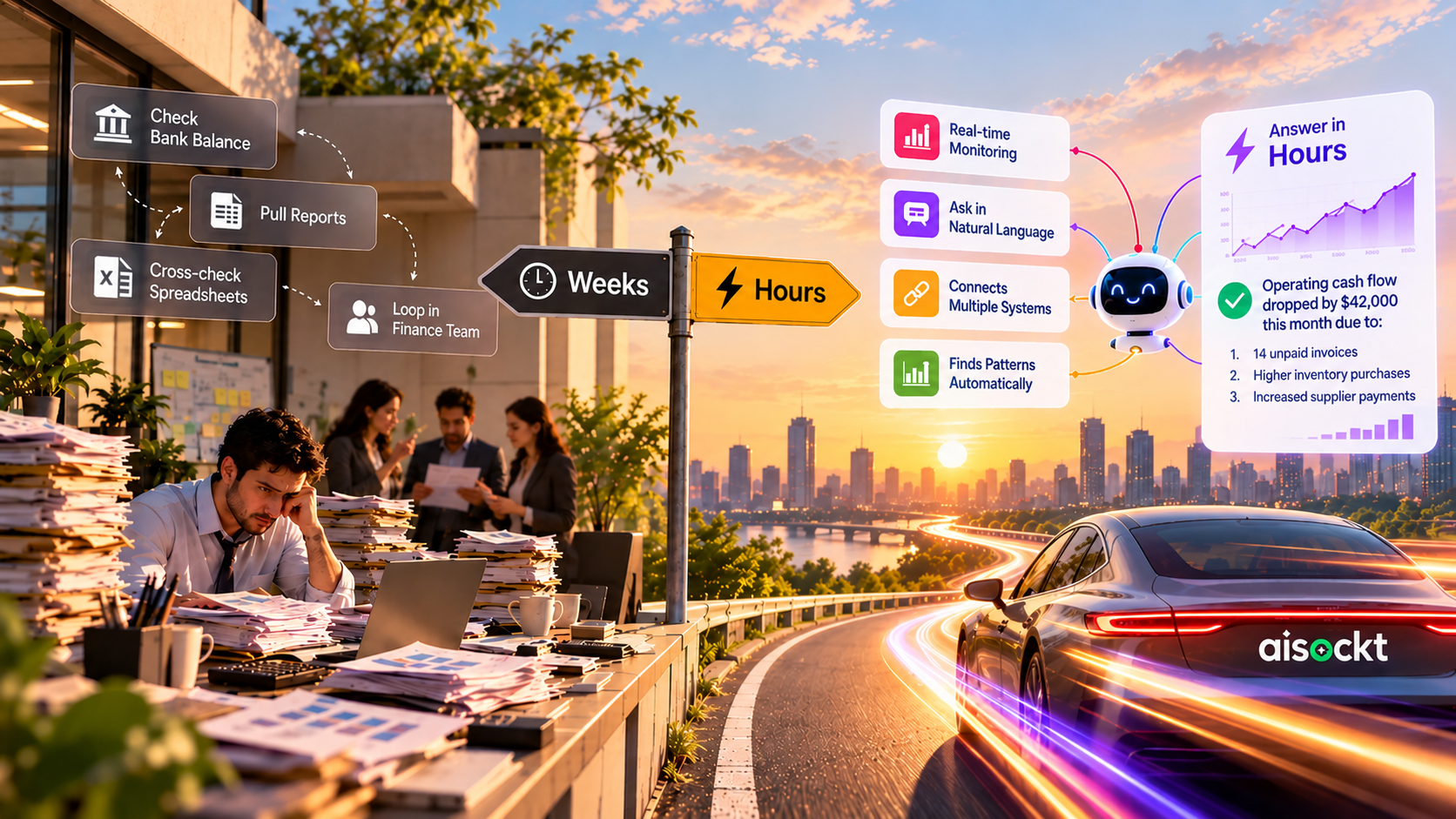


For years, "AI in business" meant chatbots and recommendation engines bolted onto the customer-facing side of a company. That's changing fast. The bigger shift happening right now is internal, AI is moving into the operational core of businesses: finance, reporting, workflow management, and decision-making. And the businesses that adopt it early aren't just saving time, they're operating fundamentally differently.
From Reporting to Reasoning
Traditional business software is good at storing and displaying data. It's bad at telling you what the data means. A dashboard can show that receivables jumped 20% this month; it won't tell you why, whether it's a problem, or what to do about it.
AI closes that gap. Instead of a human digging through spreadsheets and connector dashboards to piece together a story, an AI layer can pull data from multiple systems, spot the pattern, and explain it in plain language, "receivables grew because three key accounts extended payment by two weeks" is a very different, more useful output than a chart.
This is the real shift: AI turns reporting into reasoning. Businesses stop asking "what happened" and start asking "what should we do."
Where AI Delivers the Fastest Wins
Not every part of a business benefits equally from AI. The clearest returns tend to show up in a few specific areas:
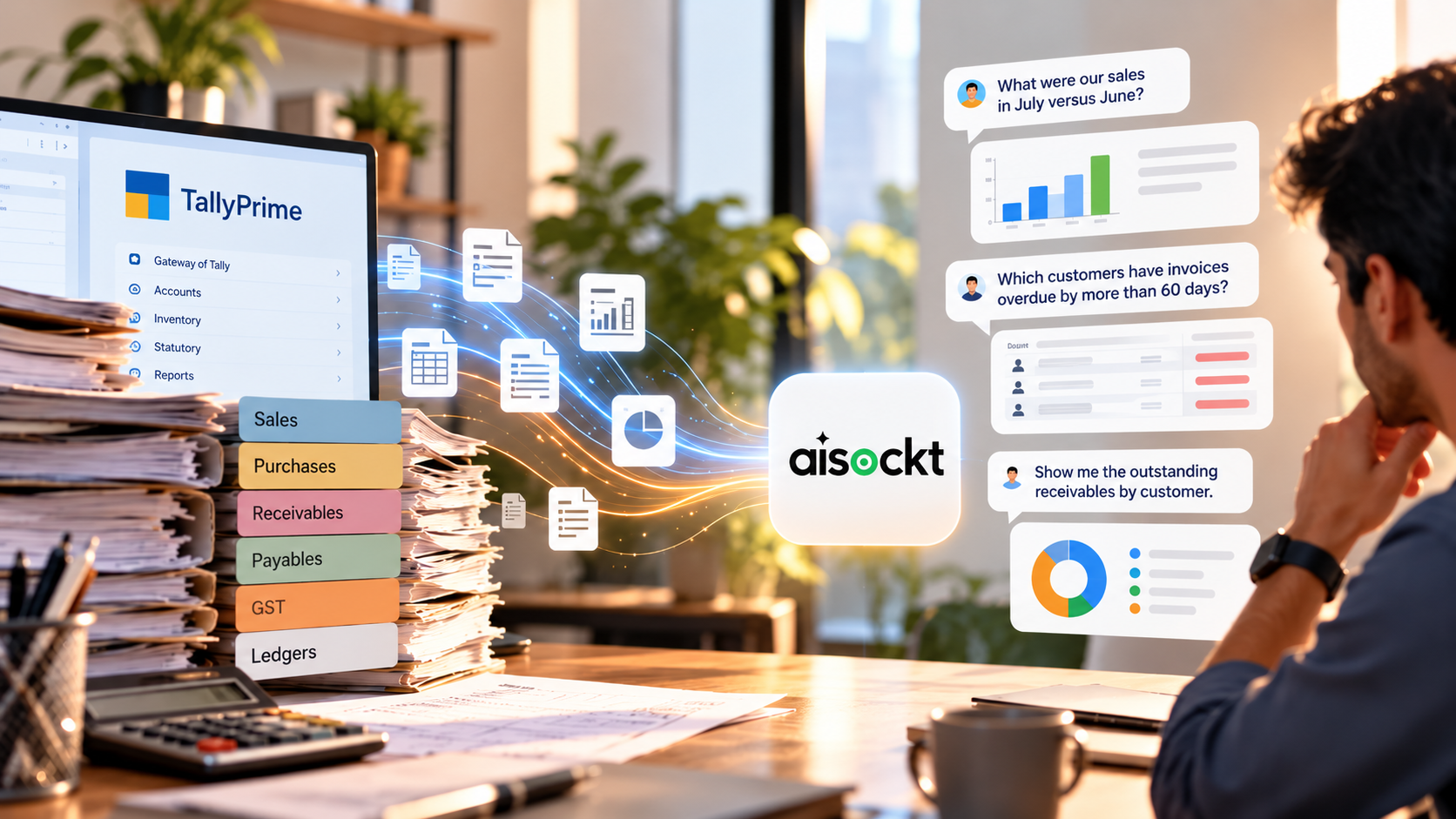
Financial operations. Reconciling data across accounting systems (Zoho Books, Tally, Xero, and similar platforms) is repetitive, error-prone work when done manually. AI-driven orchestration can monitor multiple connectors simultaneously, flag sync issues, and surface anomalies, like a cash flow gap or an unusual expense pattern, before they become a real problem.
Routine decision support. Questions that used to require pulling a finance person into a meeting, "can we afford this hire," "what's our runway if this deal slips", can be answered on demand when AI has direct access to live financial data instead of last quarter's static report.
Cross-system visibility. Most businesses run on five or six disconnected tools. AI that can query across all of them at once removes the manual stitching-together that used to eat hours every week.
The Trap to Avoid: Automation Without Judgment
Not all AI adoption is good adoption. The failure mode isn't "AI got it wrong", it's businesses using AI to automate decisions without keeping a human checkpoint where judgment actually matters. Automating a reconciliation task is low risk. Automating a credit decision or a hiring call without review is not.
The businesses getting the most value tend to draw a clear line: let AI handle detection, aggregation, and first-pass analysis at machine speed, and keep humans in the loop for anything with real consequences.
Practical Starting Points
Start with a narrow, well-defined workflow, connector health monitoring, expense anomaly detection, or report generation, rather than trying to "AI-enable" the whole business at once
Prioritize integration over new tools; AI is most valuable when it can see across your existing systems, not when it's another silo
Measure time saved and errors caught, not just adoption, usage numbers without outcomes are vanity metrics
Keep a human review step on anything with financial, legal, or reputational consequences
The Takeaway
AI's biggest impact on business isn't replacing people, it's compressing the time between "something happened" and "someone understood it and acted." Platforms like AiSockt are built around exactly this idea: bringing AI-driven visibility and reasoning directly into day-to-day business operations, rather than treating it as a separate tool bolted on the side. The businesses that treat AI as an operational layer, not a novelty feature, are the ones that will feel the difference first.